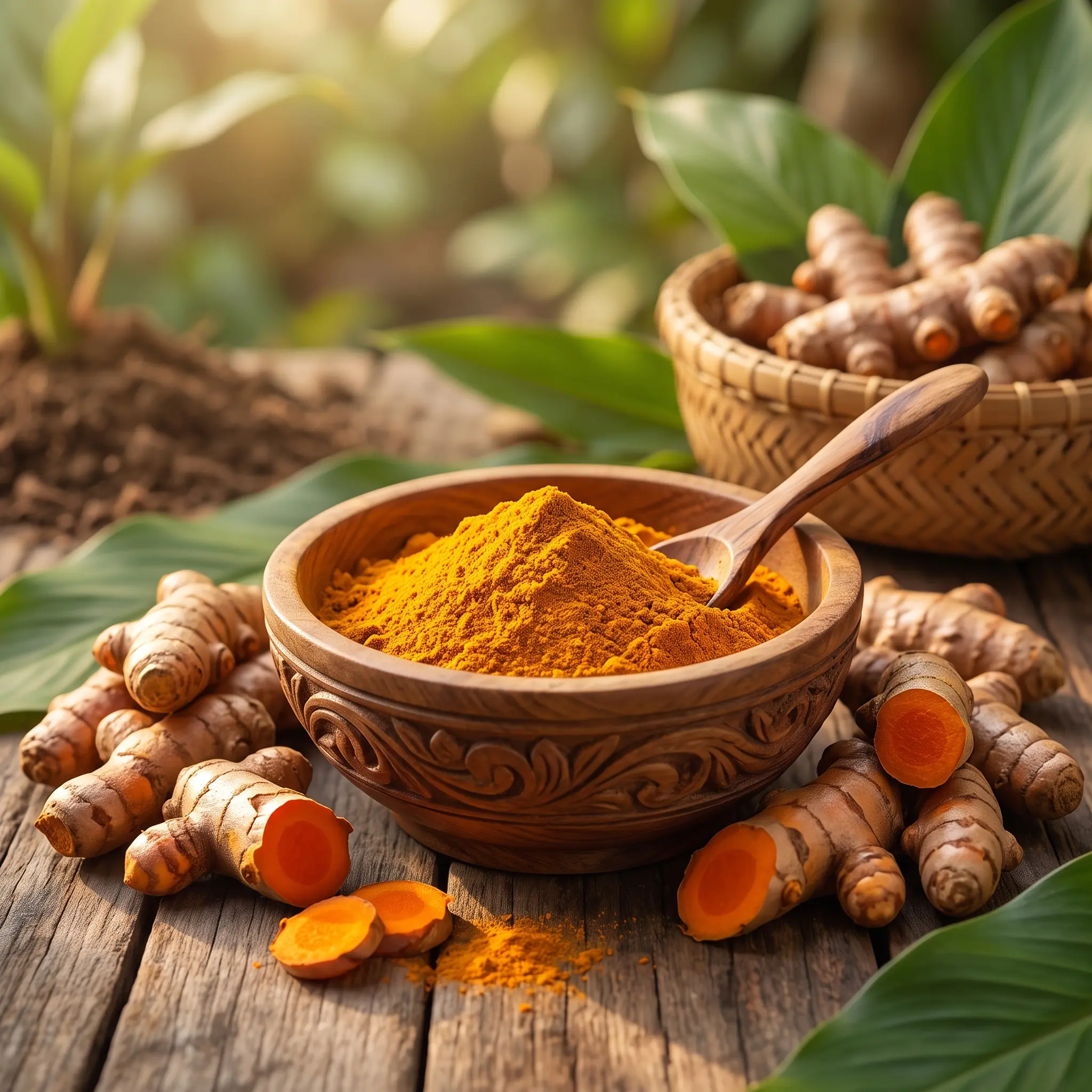
Long before modern wellness became a global movement, one golden root had already earned its place in kitchens, homes, and ancient traditions across Asia. Turmeric has been valued for thousands of years, not only for its vibrant color and distinctive earthy flavor but also for its remarkable place in traditional herbal practices.
At Qedra, we believe every spoonful of turmeric tells a story of heritage, purity, and the enduring relationship between people and plants.
What Is Turmeric?
Turmeric is the underground stem (rhizome) of the plant Curcuma longa, a member of the ginger family. After harvesting, the rhizomes are cleaned, gently boiled, carefully dried, and finely ground to produce the rich golden powder recognized around the world. Its naturally warm color comes from compounds known as curcuminoids, with curcumin being the most widely studied.
A Golden Legacy Through History
For more than 4,000 years, turmeric has played an important role in daily life across South Asia. Ancient communities valued turmeric not only as a culinary spice but also as an important part of traditional wellness systems, cultural ceremonies, and natural skincare practices. As global trade expanded, turmeric traveled across continents, eventually becoming one of the world’s most recognized and widely used spices.
Sri Lanka’s Heritage of Turmeric
Sri Lanka’s tropical climate and fertile soils provide favorable conditions for cultivating high-quality turmeric. Generations of farmers have refined traditional growing and harvesting techniques while embracing modern quality standards that ensure consistency and purity.
From Root to Powder
Every batch of turmeric begins beneath the soil. The mature rhizomes are carefully harvested, cleaned, and prepared before undergoing a controlled drying process that helps preserve their natural color and aromatic qualities. Once fully dried, they are finely milled into a smooth powder, creating the versatile spice used in kitchens around the world.
Understanding Curcumin
Curcumin is the primary natural pigment responsible for turmeric’s vibrant golden color. It belongs to a group of plant compounds called polyphenols, known for their antioxidant activity. Although curcumin represents only a small percentage of turmeric by weight, it has become the focus of thousands of scientific studies investigating its biological properties.
Because curcumin is naturally difficult for the body to absorb, many traditional recipes pair turmeric with black pepper (which contains piperine) or with healthy fats to improve bioavailability.
Naturally Occurring Compounds
- Curcuminoids
- Polyphenols
- Essential oils
- Natural antioxidants
- Plant-based phytonutrients
What Science Says About Turmeric
Scientific research has explored turmeric and its naturally occurring compounds in relation to:
- Antioxidant activity
- Supporting the body’s natural inflammatory response
- Digestive wellness
- Joint comfort
- Immune system function
- Skin health
- Healthy ageing
- General wellbeing
While these areas continue to be actively researched, turmeric is best enjoyed as part of a varied diet and healthy lifestyle rather than as a substitute for medical care.
Culinary Uses
Turmeric’s warm, earthy flavor and brilliant golden color make it one of the most versatile ingredients in global cuisine:
- Curries & rice dishes
- Soups & stews
- Marinades & vegetable dishes
- Smoothies & golden milk
- Herbal teas & spice blends
- Baking
Quality Matters
| Quality Factor | What to Look For |
| Color consistency | Rich, vibrant golden color – natural and deep |
| Natural aroma | Fresh, earthy turmeric fragrance |
| Curcumin content | Higher curcumin levels indicate premium quality |
| Moisture levels | Low moisture ensures longer freshness |
| Purity | No fillers, additives, or synthetic color |
| Fine texture | Smooth, evenly milled powder |
| Proper storage | Sealed packaging to retain freshness |
Our Commitment to Quality
At Qedra, quality begins at the source. We work with trusted growers who share our commitment to responsible cultivation, careful harvesting, and meticulous processing. Every batch is selected for its purity, freshness, vibrant color, and consistency before reaching your kitchen.
Scientific References
1. Curcumin: A Review of Its Effects on Human Health https://pmc.ncbi.nlm.nih.gov/articles/PMC5664031/
2. Turmeric (Curcuma longa) and Curcumin: Biological Activities and Medicinal Applications https://pmc.ncbi.nlm.nih.gov/articles/PMC8572027/
3. Curcumin: The Golden Spice in Treating Cardiovascular Diseases https://pmc.ncbi.nlm.nih.gov/articles/PMC6770259/
4. Safety and Anti-Inflammatory Activity of Curcumin https://pubmed.ncbi.nlm.nih.gov/17569207/
5. Turmeric: Usefulness and Safety (NCCIH) https://www.nccih.nih.gov/health/turmeric
For thousands of years, turmeric has remained one of nature’s most treasured gifts. Its vibrant golden color, rich heritage, and remarkable natural composition continue to inspire both traditional practices and modern scientific curiosity. At Qedra, we are proud to bring this timeless ingredient to your kitchen with the purity, quality, and care it deserves.
Important Note: Turmeric is a food ingredient and should be enjoyed as part of a balanced diet and healthy lifestyle. The information provided on this page is intended for educational purposes only and is not intended to diagnose, treat, cure, or prevent any disease. If you have a medical condition or are pregnant, breastfeeding, or taking medication, consult a qualified healthcare professional before making significant dietary changes.